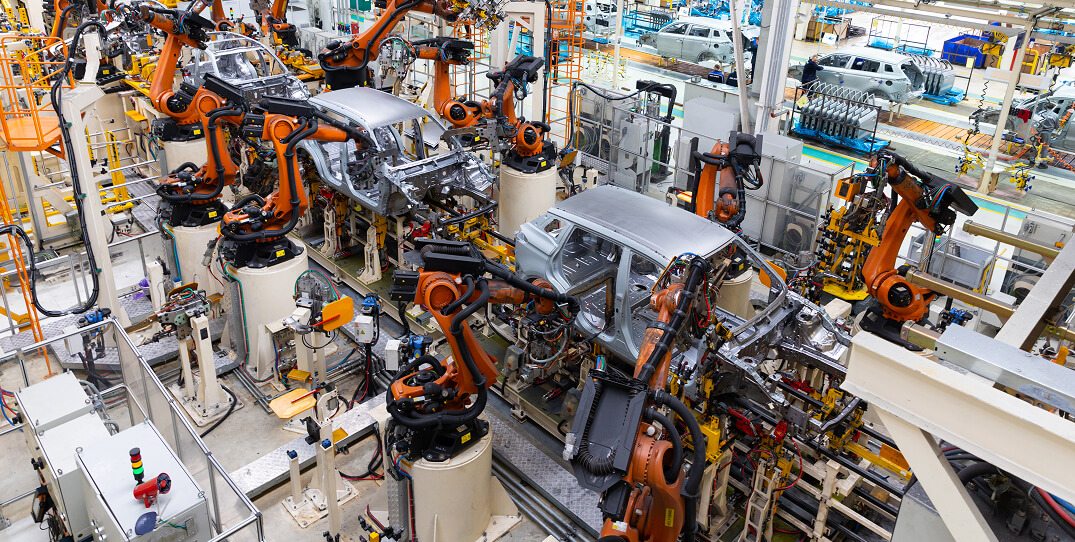
Business automation has long ceased to be synonymous with simply moving routine operations into a digital format. Today, it is being replaced by
smart automation – a fundamentally new approach based on artificial intelligence.
Unlike traditional systems, AI does not just execute pre‑written scripts; it analyzes data, learns from it, and makes informed decisions, turning business processes from cost‑driven strategies into sources of growth and competitive advantage.
What is smart automation and how is it different from regular automation
Regular automation works on an "if – then" principle, executing pre‑defined algorithms. It is effective for standardized, repetitive tasks: moving data from one spreadsheet to another, sending emails, mass mailings. However, it is blind to any deviations from the script and incapable of analysis.
Smart automation is an evolution of this approach. Its core is artificial intelligence, which brings three key qualities.
- Analysis and understanding. AI can work with unstructured data – read text in documents, understand the meaning of customer inquiries, recognize images.
- Learning and adaptability. Models continuously improve based on new data, adapting to changes in processes and identifying new patterns.
- Decision making. The system does not just perform an action; it evaluates the context and chooses the optimal path from many options.
!
The key difference: traditional automation executes commands, while smart automation thinks within the scope of the task.
Which business processes are best to automate with AI
To get the most benefit from smart automation, it is important to choose the right processes for its implementation. Ideal candidates are tasks that consume a lot of employee time, require analysis of large volumes of data, or involve routine but important decisions.
Types of processes where AI delivers maximum impact
- Processes with large volumes of unstructured data. Handling requests, emails, documents (contracts, invoices, reports). AI can extract the essence, classify, and route them.
- Processes that require forecasting. Demand analysis, inventory planning, churn risk assessment. Machine learning models find hidden patterns that humans cannot see.
- Customer‑facing processes. Support, sales, marketing. AI provides personalization at scale – from tailoring unique offers to 24/7 answers.
- Complex operational processes. Logistics, production line management. AI optimizes routes, forecasts load, and alerts about failures.
How to assess whether a process is ready for smart automation
Before launching a project, ask four key questions.
- Is there a measurable goal? What do we want to achieve – speed, error reduction, cost savings? For example, reduce request processing time from 10 to 2 minutes.
- Is there enough data? The process must be digitized. AI needs something to learn from – archives of requests, historical sales data, a document database.
- Are there clear rules? Even for an AI model, it is important to understand the basic success criteria and constraints.
- Can the process be isolated? Start with one narrow but painful scenario. Success there will become a springboard for scaling.
7 ways to optimize business processes with AI
Modern AI is not a single magic button, but a set of tools for different tasks. Here are seven of the most effective ways to apply it to optimize your business processes today.
1. Intelligent chatbots and voice assistants
Ordinary script‑based bots often lead conversations into a dead end. Intelligent assistants based on LLMs (Large Language Models) understand context, maintain long conversations, and solve non‑standard questions by accessing your knowledge base.
- What it delivers. Removes 70‑80% of the load from the first line of support, speeds up customer response to 10‑15 seconds, works 24/7.
- Example. A customer writes: "My payment isn't going through on the site, but everything was fine yesterday." The AI doesn't just search for keywords; it analyzes the history of inquiries, checks the status of incidents with the payment system, and gives a personalized answer.
2. Automated document and request processing
AI has learned not just to "see" text in documents, but to understand its meaning. Computer Vision and NLP (Natural Language Processing) technologies make it possible to automatically extract details from invoices, check contracts against templates, and classify incoming requests.
- What it delivers. Document processing speed increases 5‑10 times, and the number of errors due to human factor approaches zero.
- Example. The system receives a scanned receipt, recognizes the amount, payer, and purpose of payment, then automatically creates and posts the document in 1C without requiring an accountant's involvement.
3. Smart analytics and forecasting
This is a classic of machine learning that remains relevant. Models analyze historical data and identify complex, non‑obvious patterns.
- What it delivers. A shift from reactive to proactive management. You don't just look at what happened; you predict what will happen.
- Example. Customer churn prediction. AI evaluates customer behavioral patterns and identifies those who are highly likely to leave for competitors, allowing the retention team to take timely action.
4. Personalization of marketing and sales
Instead of mass mailings "hoping for a result", AI makes every customer feel valued. Algorithms segment audiences by thousands of parameters and in real time select relevant offers.
- What it delivers. Conversion increase of 15‑30%, higher average order value, and increased loyalty.
- Example. An online store shows a visitor not just "popular products" but those that complement their past purchases or are often bought together with items they have already viewed.
5. RPA + AI agents for the back office
Robotic Process Automation (RPA) by itself is limited. But combined with AI, it becomes a powerful digital employee. The RPA robot performs actions in interfaces, while the AI "brain" makes decisions: what data to enter, where to click, how to handle an exception.
- What it delivers. End‑to‑end automation of processes that require not only action but also analysis. For example, approving vacation requests based on schedule and remaining days.
- Example. AI agents don't just move data; they write code, test, and fix errors, saving developers dozens of hours.
6. AI assistants and knowledge bases for employees
The problem is not the lack of information, but the speed of finding it. AI assistants connected to internal knowledge bases (wikis, regulations, correspondence) give accurate answers to employee questions in real time.
- What it delivers. 50% reduction in time spent searching for information, faster onboarding for new hires, standardized decisions.
- Example. A manager writes in the corporate chat: "What promotional product are we pushing this week for the 'Small Business' segment?" The AI assistant, knowing the context of the employee's role, instantly provides a link to the relevant regulation and promo materials.
7. Optimization of operational processes and logistics
In manufacturing and logistics, AI works with data from sensors, GPS trackers, and accounting systems to predict demand, optimize routes, and prevent failures.
- What it delivers. 10‑25% reduction in logistics costs, reduced equipment downtime, improved planning quality.
- Example. AI analyzes vibrations, temperature, and other parameters of a machine and warns that a bearing needs to be replaced in 2 weeks – before it fails and stops the line.
How to implement smart automation in a company: a step‑by‑step approach
Based on our experience, a systematic approach avoids major mistakes and guarantees results.
- Planning and assessment. Formulate a clear business goal and select one specific process. Answer the question: "Which metric do we want to improve?"
- Data preparation. Collect historical data that will serve as the foundation for training the model. Remember: data quality determines the quality of the future AI.
- Development and prototyping. Create a minimum viable product (MVP) – a simplified version of the future solution. Its job is to prove that AI can handle the task in principle.
- Testing and pilot. Run the prototype in real conditions, but with a limited group of users. Compare "before" and "after" metrics, collect feedback.
- Scaling and integration. After the pilot succeeds, integrate the solution into the company's workflows, connect it to CRM, ERP, and other systems.
- Support and development. Set up monitoring of key metrics. The model requires regular updates and retraining on new data so that its quality does not degrade over time.
!
We discuss the nuances of each stage in more detail in our article
"
AI Implementation in Business: Myths, Reality, and Practical Tips".
Risks and limitations of AI automation to keep in mind
A clear‑eyed view of potential challenges is the key to project success. Thoughtful risk management turns potential threats into strategic advantages, increasing the reliability and predictability of the final solution.
Data drift and model degradation
The world changes, and a model trained on yesterday's data may become irrelevant tomorrow. Continuous data monitoring is required.
Black box and lack of explainability
Not all models can easily describe their logic. In critical areas (medicine, finance), this may be unacceptable for end‑to‑end processes, but it is perfectly acceptable for solving narrow, highly specialized tasks.
Security and confidentiality
Transferring data to third‑party APIs or misconfiguring access rights can lead to leaks. Strict security protocols are required.
Integration complexity
Legacy systems may lack convenient APIs for connecting AI, increasing the cost and development time of the project.
Employee resistance
Employees may fear the new system or distrust it. It is important to involve the team from the very beginning, showing that AI is an assistant, not a replacement.
How to measure the effectiveness of smart automation
AI implementation is an investment, and its return must be tracked using specific metrics. Properly chosen indicators will not only help prove the project's value but also identify points for further improvement.
Efficiency.
-
- Speed. Process time "before" and "after" (e.g., request processing).
- Productivity. Number of operations per employee per unit of time.
- Accuracy. Error rate (e.g., in documents or request classification).
Service quality and satisfaction.
-
-
- NPS/CSAT. Increase in customer loyalty due to speed and personalization.
- Average time to resolve a customer issue.
!
You will find a detailed breakdown of calculation methods and case studies from different industries in our article
"
Economic Indicators of AI Implementation: What Practice Shows".
Conclusion
Smart automation based on artificial intelligence is no longer a futuristic concept but a working tool that allows businesses to make a qualitative leap in productivity, efficiency, and customer focus.
The key to success lies in a systematic approach: start with a clearly defined and measurable task, choose the right process, and methodically go from pilot to full‑scale implementation.
The main thing to remember: AI does not replace the team – it augments it, taking over routine and analytics.