Artificial intelligence no longer looks like a technology of the future – it has long become part of everyday business.
Today, companies of any size can use neural networks not just for point‑optimization, but as a foundation for new directions that seemed out of reach just yesterday.
!
In this article, we show how AI really works in business. What criteria should be used to select ideas? And which directions actually generate real money.
How neural networks work in business
A neural network is a system that learns to recognize patterns in data – just like we humans do. It takes in information, analyzes it, finds connections – and produces a result: a forecast, a recommendation, text, or an action.
In business, neural networks perform three key tasks:
- Automation – processing requests, sorting documents, communicating with customers.
- Analytics and forecasting – hidden patterns in customer behavior, demand seasonality, future trends.
- Personalization – adapting products, ads, or services to individual users, increasing conversion and loyalty.
Example:
- In banking, AI analyzes credit history and predicts risks.
- In e‑commerce, it recommends products and optimizes prices.
- In HR, it matches suitable candidates in seconds.
Modern models like GPT or Claude have even learned to speak our language – working with text, images, and code. This has opened the door to services we used to read about only in science fiction: from automated lawyers to digital designers.
!
AI does not "replace" humans. It becomes their superpower – giving the ability to see more, react faster, and make decisions based on data rather than intuition.
Criteria for selecting and evaluating AI‑based business ideas
Not every idea with an "AI" label turns into a successful business. For the technology to deliver real value, you need to evaluate not its "engine" but something more important.
Key criteria:
- Real market need
An AI project must address a specific pain point: save time, reduce errors, increase conversion. If customers are already paying for similar solutions, that's a strong sign the niche is alive.
- Data availability and quality
Without quality data, any neural network is like us without books – blind and powerless. Ask yourself: where will the data come from? Is it legal to use? Is there enough of it?
- Economic efficiency
The technology must pay off. Calculate: how much will you save? How much will you earn? Business is not charity.
- Scalability
A successful idea should be able to grow without proportionally increasing costs. One chatbot can serve one hundred or one thousand customers – without hiring new operators.
- Regulatory and ethical constraints
Not all sectors are ready for AI. Medicine, finance, education – they have strict rules on data protection and accountability.
- Technical feasibility
Sometimes it's simpler and cheaper to use existing APIs than to build a system from scratch. Be realistic about your resources and capabilities.
- Level of competition
If the market is dominated by large players, look for a narrow niche. Don't try to beat Yandex – make the best search, for example, for pharmacists.
!
At InsightAI, we evaluate promising projects against exactly these parameters before moving into development.
Best AI business ideas
AI has long moved beyond automation. Today it underpins services that create new markets and business models.
Chatbots and virtual assistants for business
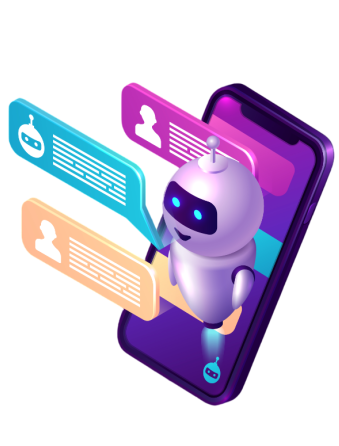
One of the most popular directions – smart chatbots. Modern assistants understand meaning, hold conversations, and genuinely help – from placing an order to handing off complex requests to a human manager.
Where they are used
- Customer support – 24/7 without breaks.
- Sales – capture leads and nurture them.
- HR – answer employee questions, saving HR time.
- Education – interactive assistants for students.
Why it's profitable
- Reduces operator load by up to 70%.
- Customers get answers in seconds, not hours.
- Scaling without increasing headcount.
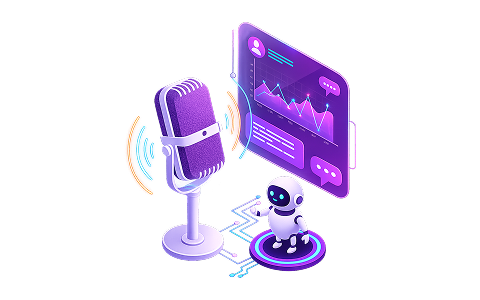
Example: after implementing a voice assistant, response time dropped 6‑fold, operator load by 70%.
!
Bottom line: chatbots are a simple way to launch an AI direction with minimal investment and quick impact.
AI‑powered marketing and advertising automation tools
It analyzes audiences, creates creatives, selects keywords, and manages budgets so effectively that manual marketer work is cut in half.
How it's used
- Content creation: texts, images, even video for ads.
- Ad optimization: finds the best channels and bids.
- Personalization: adapts newsletters and banners.
- Analytics: conversion forecasting, channel attribution.
Advantages
- Manual marketer work reduced by 50–70%.
- Higher targeting accuracy.
- Campaign launch accelerated 3x.
Example: an e‑commerce brand lowered CPA by 28% and tripled campaign launch speed using an AI creative generation platform.
!
Bottom line: AI marketing pays off quickly and integrates easily with familiar tools – from Yandex.Direct to CRM.
Analytics and demand/customer forecasting
AI helps businesses not just analyze yesterday but predict tomorrow. It uncovers patterns invisible to the human eye and turns data into clear, money‑making forecasts.
Where it's used
- Retail: sales forecasting and inventory planning.
- E‑commerce: predicting repeat purchase probability.
- Finance: risk analysis and default probability.
- Marketing: conversion and campaign response forecasting.
Advantages
- Cost reduction through accurate planning.
- Better decision‑making – from procurement to promotions.
- Ability to respond quickly to market changes.
Example: AI demand forecasting helped a distributor reduce inventory by 15% and accelerate warehouse turnover.
!
Bottom line: AI analytics turns data into a competitive advantage.
AI for HR and recruiting
HR professionals have breathed a sigh of relief. AI has learned to sort through mountains of resumes, assess skills, and even predict whether a candidate will thrive in the company.
How it's used
- Resume analysis: sorting and filtering by relevant criteria.
- Skills assessment: analyzing candidate responses and matching against job profiles.
- Interviews: automated interviews and summarizing dialogues.
- HR analytics: predicting turnover and employee satisfaction.
Advantages
- Time‑to‑hire reduced by 50–70%.
- Minimized human bias and subjectivity.
- Improved quality of hire.
Example: AI resume screening cut initial screening time from 4 days to 4 hours.
!
Bottom line: AI frees HR from routine and makes hiring objective and fast.
Medical and healthcare solutions
AI helps doctors diagnose faster, analyze tests, and predict disease progression.
How it's used
- Diagnostics: detecting pathologies in scans (X‑ray, MRI, CT).
- Patient monitoring: real‑time analysis of patient metrics.
- Personalized therapy: treatment selection based on genetics and medical history.
- Administrative tasks: automating reporting and documentation.
Advantages
- Faster diagnosis and reduced error rates.
- Increased accessibility of medical care.
- Reduced load on doctors and staff.
Example: AI‑based image analysis reduced diagnosis time from 20 minutes to 2 and increased accuracy by 15%.
!
Bottom line: AI in healthcare helps doctors make faster, more accurate decisions.
Legal and contract AI solutions
AI helps lawyers analyze texts, identify risks, and improve the accuracy of legal decisions.
How it's used
- Contract analysis: automatic detection of inconsistencies and risks.
- Document comparison: checking for duplicates and differences.
- Compliance monitoring: tracking changes in laws and regulations.
- Document preparation: generating templates and contract summaries.
Advantages
- Lawyer time savings up to 70%.
- Minimized human error.
- Fast knowledge base updates when legislation changes.
Example: AI contract analysis reduced review time from 2 hours to 10 minutes.
!
Bottom line: AI improves legal work quality and reduces routine.
AI in logistics and supply chains
In logistics, every percentage point of optimization saves millions of rubles. AI forecasts demand, builds optimal routes, and predicts equipment breakdowns.
How it's used
- Route optimization: accounting for traffic, weather, schedules, and restrictions.
- Inventory forecasting: analyzing sales and external factors for warehouse planning.
- Shipment tracking: monitoring cargo and automatic response to delays.
- Predictive maintenance: forecasting wear and tear on equipment and vehicles.
Advantages
- Logistics cost reduction of 10–30%.
- Improved delivery accuracy and speed.
- Reduced downtime and fuel overuse.
Example: an FMCG distributor reduced inventory by 18% while maintaining 99% delivery accuracy.
!
Bottom line: AI makes logistics predictable, transparent, and manageable.
Security systems and fraud detection
AI can analyze thousands of events per second, finding anomalies that a human would simply miss.
How it's used
- Financial sector: detecting suspicious transactions and behavioral anomalies.
- Cybersecurity: monitoring network traffic, detecting intrusions and phishing.
- Access control: biometric identification and behavioral analysis.
- Video analytics: real‑time recognition of faces, license plates, and objects.
Advantages
- Rapid threat detection and loss prevention.
- Minimized human error in monitoring.
- Increased trust from customers and partners.
Example: a bank's AI system reduced fraud cases by 35% and accelerated operations by 40%.
!
Bottom line: AI enhances business security by helping anticipate threats.
Educational platforms with adaptive learning
The algorithm analyzes how you learn – what comes easily, where you get stuck – and adapts the material specifically to you.
How it's used
- Adaptive courses: personalized learning paths.
- AI tutors: answering questions and explaining mistakes in real time.
- Analytics: tracking student engagement and outcomes.
- Content generation: automatic creation of tests, flashcards, and assignments.
Advantages
- Higher motivation and retention.
- Ability to scale training without quality loss.
- Reduced load on teachers and HR departments.
Example: a corporate AI learning platform reduced employee training time by 25%.
!
Bottom line: AI makes learning flexible and interactive, helping businesses develop talent faster.
AI solutions for smart homes, IoT, and energy management
AI combined with the Internet of Things (IoT) makes our living environment smart, economical, and safe – from an apartment to an entire city.
How it's used
- Smart homes: automated lighting, climate control, security, voice control.
- Smart cities: regulating lighting, transport, and waste management.
- Power grids: consumption forecasting, load balancing, loss reduction.
- Industrial IoT: equipment monitoring, failure prediction, resource optimization.
Advantages
- Energy cost reduction of 20–30%.
- Improved reliability and operational convenience.
- Centralized system management.
Example: a residential complex with AI‑based control reduced energy costs by 22%.
!
Bottom line: AI and IoT are becoming the foundation of a sustainable and eco‑friendly future.
Risks and limitations of using AI and how to mitigate them
Despite the enormous potential, implementing AI also carries certain risks – both technical and ethical. To make a project sustainable, it's important to consider them upfront.
- Data quality
Incorrect, incomplete, or biased data leads to distorted outcomes.
How to mitigate: conduct regular data audits, clean, update, and check datasets for balance and accuracy.
- Lack of algorithmic transparency
Many models are "black boxes" whose decisions are hard to explain, reducing user trust.
How to mitigate: use Explainable AI (XAI), document model logic and data sources.
- Privacy breaches
Working with personal data requires strict adherence to information protection rules.
How to mitigate: apply encryption, anonymization, and access control; comply with legal requirements (GDPR, FZ‑152, etc.).
- Technical failures and vendor dependency
API outages, service shutdowns, or changes in terms of use can paralyze processes.
How to mitigate: plan fallback scenarios, use hybrid or on‑premise solutions.
- Ethical risks
Incorrect outputs, discrimination, or manipulation – typical pitfalls when using models carelessly.
How to mitigate: adopt a Responsible AI policy, keep humans in critical decision‑making loops.
- Financial and reputational consequences
Errors in forecasts or automated decisions can lead to losses and undermine customer trust.
How to mitigate: regularly review models, track key metrics, and train staff to work with AI.
!
Bottom line: responsible AI increases trust and solution robustness. Companies that account for risks early win in the long run.
Conclusion
Artificial intelligence is no longer an experiment. It has become a working tool for building products, services, and entire companies that solve real problems.
The key is not to chase the trendiest neural network. Look for points where AI can deliver genuine value. Sometimes a simple chatbot or recommendation system turns out to be more profitable than a multi‑million‑dollar "breakthrough" project.
InsightAI's experience proves: successful AI businesses start small. With one scenario. With a measurable effect. With clear, tangible benefits.
!
AI will not replace the entrepreneur. It will become their most capable employee – one who sees patterns, makes decisions in seconds, and frees up time for what matters most: strategy and growth.